Spray foam itself does not automatically cause mould. Mould needs moisture and suitable conditions to grow.
However, some spray foam installations can contribute to moisture problems. For example, foam applied beneath a roof may alter airflow through the loft. If the installation restricts ventilation, moist air may struggle to escape.
This can become particularly noticeable during colder weather.
Everyday activities such as cooking, showering and washing create moisture inside your home. Warm air can carry this moisture upwards into the loft. When it reaches a cold surface, the water vapour can turn into condensation.
Therefore, your roof space needs to manage moisture effectively. Good ventilation helps moist air escape. Without sufficient airflow, surfaces can remain damp for longer. In turn, these conditions can encourage mould growth.
However, every property is different. The roof design, type of spray foam, installation quality and existing ventilation can all affect how a roof performs.
Mould rarely has one simple cause. Instead, several issues can contribute to excess moisture within a loft.
Understanding these causes can help you determine whether your spray foam requires professional attention.
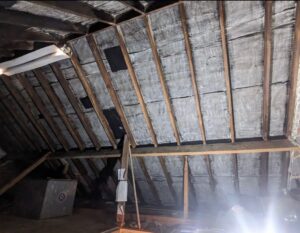
Ventilation allows moisture to escape before it settles on colder surfaces.
However, some spray foam installations may obstruct existing ventilation routes. Consequently, humid air can remain within the loft for longer.
Repeated exposure to moisture can then create favourable conditions for mould. Over time, persistent damp may also affect vulnerable materials within the roof space.
Therefore, you should investigate ventilation if you notice mould or condensation after having spray foam installed.
Condensation develops when warm, moist air reaches a cold surface.
Within a loft, condensation can form on roof timbers, roofing membranes and other cold surfaces. The problem often becomes more noticeable during winter because of the greater difference between indoor and outdoor temperatures.
Normally, ventilation helps this moisture escape. However, inadequate airflow can allow surfaces to remain damp.
As a result, you may notice musty smells, visible mould or persistent dampness within the loft.
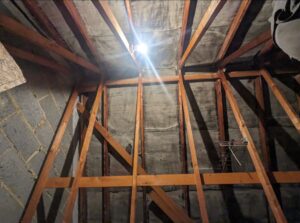
Spray foam does not cause every moisture problem.
For instance, a damaged roof tile, defective flashing or another roofing fault may allow rainwater to enter the roof. Unfortunately, spray foam can sometimes make the source of the leak harder to identify.
Large areas of foam may cover the underside of the roof. Therefore, homeowners may struggle to locate where water has entered.
For this reason, you should investigate the underlying cause of damp rather than immediately assuming the spray foam has caused it.
The quality of the original installation also matters.
Your roof functions as a complete system. The insulation, ventilation, roof coverings and structural timbers all need to work together.
Therefore, an installer should consider the construction and ventilation requirements of the property before applying spray foam.
Problems can arise when an installation fails to account for these factors. However, this does not mean every spray foam installation is unsuitable.
If you already have moisture problems, a professional assessment can help establish what is happening and whether you need to remove the foam.
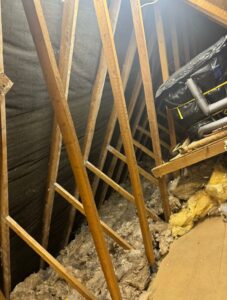
Some moisture problems are easy to see. Others can remain hidden for a considerable time.
Therefore, knowing the warning signs can help you recognise when your loft needs further investigation.
Look for:
• Visible mould on exposed roof timbers
• Persistent musty smells
• Condensation beneath the roof covering
• Damp patches
• Water staining
• High humidity within the loft
• Dark or discoloured timber
• Signs of a roof leak
These symptoms do not prove that spray foam has caused the problem. Nevertheless, you should investigate them.
This becomes particularly important when spray foam prevents you from seeing large areas of the roof structure.
Yes, spray foam can make parts of a roof more difficult to inspect.
Installers may apply the material directly to timbers, roofing membranes and other surfaces. Once the foam covers these areas, homeowners and surveyors may struggle to see the materials underneath.
However, concealed timber is not necessarily damaged.
Many factors determine the condition of a roof. Therefore, you should not assume that hidden timbers have deteriorated simply because spray foam covers them.
The main problem is visibility.
If condensation or water ingress has developed behind the insulation, you may not see the warning signs immediately. In some circumstances, the foam can also prevent a surveyor from carrying out a complete visual inspection.
Professional spray foam removal can restore access to these areas. Once specialists remove the foam, an appropriate professional can inspect the roof structure and determine whether it needs further attention.
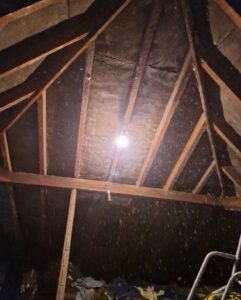
Do not assume that finding mould means you need a new roof.
Instead, start by identifying why the mould has developed.
Poor ventilation may be responsible. Alternatively, you could have a roof leak, condensation problem or another source of excess moisture.
Spray foam may also make the problem harder to investigate if it covers the affected area.
Therefore, arrange a professional assessment rather than relying solely on what you can see.
A specialist can assess the spray foam installation and determine whether removal would provide the access needed for a more thorough roof inspection.
Acting promptly can also help. The longer materials remain damp, the greater the opportunity for moisture related problems to develop.
Not always.
Every property requires individual consideration. Finding mould does not automatically mean you need to remove all the spray foam.
However, removal may become appropriate in certain circumstances.
For example, you may need to consider removal if the foam prevents a proper roof inspection. You may also consider it if the installation restricts ventilation or conceals areas affected by moisture.
Likewise, a surveyor or mortgage lender may require greater visibility of the roof structure.
Therefore, the important question is not simply whether your property contains spray foam. Instead, you need to establish whether the foam is contributing to a problem or preventing professionals from assessing your roof properly.
If mould or damp is present, removing the foam can expose the affected areas. You can then determine whether the roof requires additional work.
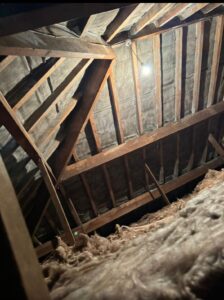
Spray foam removal requires care.
The material can bond firmly to timbers and surrounding roofing materials. Therefore, attempting to pull or scrape it away without the correct approach could cause unnecessary damage.
Different types of spray foam also behave differently. For example, closed cell foam tends to be more rigid and can adhere strongly to surrounding materials.
Professional removal provides a more controlled solution.
First, specialists carefully remove the foam from the relevant areas. This exposes parts of the roof that were previously hidden.
Then, an appropriate professional can inspect the underlying structure. They can look for damp, timber deterioration, roofing defects and other potential problems.
Removal may also improve airflow where spray foam has obstructed existing ventilation routes. However, the result will depend on the construction and condition of your roof.
Foam Away provides specialist spray foam removal across the South Coast. Our team works carefully to expose the roof structure while protecting the underlying materials wherever possible.
Removing spray foam does not mean you need to leave your home without effective insulation.
Instead, you can consider an appropriate replacement once professionals have assessed the roof and completed any necessary work.
For many traditional UK properties with a cold loft, mineral wool insulation such as Rockwool may provide a suitable option. Installers can place it at ceiling level while keeping much of the roof structure visible.
However, they must maintain appropriate ventilation. Blocking airflow at the eaves can create further moisture problems.
Foam Away can also advise on SuperFOIL insulation where it suits the construction of the property.
Ultimately, no single insulation product suits every home. The right solution depends on your roof construction, ventilation requirements and intended use of the loft.
Therefore, replacement insulation should provide effective thermal performance while allowing the roof to manage moisture correctly.
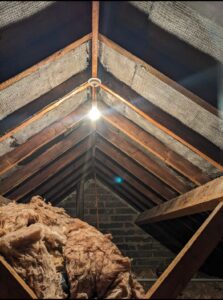
If you have discovered mould, damp or condensation around spray foam insulation, you need to understand what is happening beneath the material.
Foam Away specialises in professional spray foam removal for homeowners across the South Coast.
Our team removes spray foam carefully and methodically. This process can uncover previously hidden areas and provide greater access to the roof structure.
As a result, you can make decisions based on the actual condition of your property rather than assumptions about what may be hidden beneath the foam.
We can also advise on suitable replacement insulation and associated roofing requirements where appropriate.
So, whether you live in Bournemouth, Poole, Southampton, Portsmouth or elsewhere along the South Coast, contact Foam Away to discuss your property and get a free quote.
Mould in a loft can point to a wider moisture problem, so it is worth investigating the cause rather than ignoring the warning signs.
Spray foam does not automatically cause mould. However, poor ventilation, condensation, leaks and unsuitable installation can all contribute to damp conditions. In some cases, the foam can also hide parts of the roof structure and make it harder to see what is happening underneath.
Therefore, if you have noticed mould, musty smells, damp patches or condensation, a professional assessment can help you understand the problem properly.
Foam Away provides specialist spray foam removal across the South Coast. Our team can carefully remove the foam, expose the roof structure and help you take the next appropriate step.
Contact Foam Away today to discuss your loft and get a free quote for professional spray foam removal.
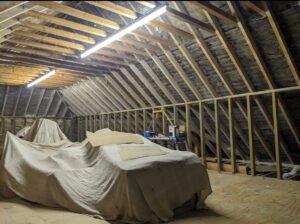
Not necessarily. Several factors can cause condensation, including humidity, ventilation and roof construction.
However, an unsuitable spray foam installation may restrict airflow. As a result, moisture may struggle to escape from the loft.
Therefore, you should investigate persistent condensation rather than assuming that it is a normal consequence of having spray foam.
Yes, mould can grow wherever suitable moisture conditions exist.
If condensation or water ingress develops behind spray foam, you may struggle to see the problem because the insulation can conceal parts of the roof.
Therefore, professional removal may be necessary if you need access to inspect hidden areas.
Look for condensation, damp patches, musty smells, visible mould, water staining and persistently damp timber.
However, these symptoms can have several causes. A roof leak or poor ventilation may be responsible.
For that reason, arrange a professional assessment before deciding what action to take.
It can help in some circumstances.
For example, removal may restore airflow if the spray foam blocks existing ventilation routes. It can also expose the roof and make other causes of condensation easier to identify.
However, some properties may require additional ventilation or roofing work. Therefore, the correct solution depends on the individual roof.
Trusted & verified on