Several signs can indicate that your spray foam insulation warrants closer investigation.
Importantly, you should consider the installation as part of the wider roof rather than looking at the foam in isolation. Your roof covering, timbers, ventilation, moisture levels and original construction all contribute to the way the structure performs.
You should consider seeking professional advice if you notice moisture or condensation, have concerns about the condition of your roof, cannot adequately inspect the timbers or encounter problems when selling or remortgaging your home.
Poor installation can provide another reason to investigate. Foam Away identifies trapped moisture, hidden roof concerns and inadequate application among the issues that can arise with problematic installations.
Ultimately, the most reliable way to decide whether spray foam insulation removal is appropriate is to consider the individual condition and circumstances of your property.
Moisture deserves attention in any roof, regardless of whether spray foam is present.
Look for symptoms such as persistent condensation, damp patches, mould, musty odours or visible moisture around accessible roof timbers. These signs do not prove that spray foam has caused a problem. Nevertheless, they provide a good reason to investigate what is happening.
RICS explains that most traditional pitched roofs in houses and bungalows were designed with ventilation in mind. Applying spray foam to the underside of the roof changes how that roof space performs. If insulation is installed incorrectly, inadequate moisture control can result in condensation and damage to parts of the property.
Consequently, you should not simply assume that removing the visible moisture will solve the underlying issue. The cause needs to be understood.
If spray foam prevents an adequate assessment of the affected area, professional removal may form part of the solution.
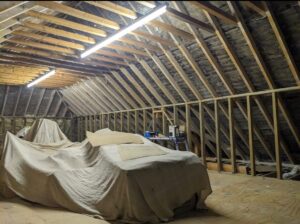
One of the most important concerns surrounding spray foam is visibility.
A roof needs to be inspected and maintained throughout its life. However, spray foam applied around rafters and other parts of the structure can conceal areas that would ordinarily be visible from inside the loft.
RICS specifically warns that some spray foam insulation can restrict the view of a roof from within the roof space. If foam covers the timber structure, a complete visual inspection may become difficult.
This matters because problems such as water ingress or timber deterioration may be harder to identify when the relevant areas are hidden.
The issue can become particularly important when you arrange a building survey, prepare your home for sale or apply for a new mortgage.
Professional spray foam removal can expose previously covered areas, making it possible for the underlying structure to be examined more readily.
Not every spray foam installation has been completed to the same standard.
Poor application may result in uneven coverage, inappropriate positioning or other problems that affect how the roof performs. Furthermore, the original condition of the roof should have been considered before the insulation was installed.
RICS advises that a property should be wind and watertight before thermal improvements are undertaken. It also states that appropriate consideration should be given to ventilation, condensation risk and the condition of existing materials.
Therefore, if you have doubts about how your spray foam was installed, further assessment can help establish whether leaving it in place is sensible.
It is also worth finding any documentation supplied when the work was completed. Installation records, product information, calculations, warranties and photographs may help professionals understand what was installed and how the work was undertaken.
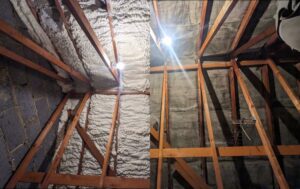
Ventilation is another important consideration.
Many traditional pitched roofs rely upon air circulation to help manage water vapour and reduce condensation risk. Adding spray foam can change the way air and moisture move through the roof space.
However, it would be misleading to say that spray foam automatically causes condensation or ventilation problems.
The result depends upon the roof construction, insulation product, installation method and measures taken to manage moisture. RICS notes that there is no single approach suitable for every installation and that different spray foam products have their own requirements.
Therefore, visible condensation or concerns about restricted ventilation should prompt proper investigation rather than assumptions.
If your existing foam is contributing to a problematic roof arrangement, professional spray foam removal may allow the roof space to be reassessed and an appropriate solution considered.
For many homeowners, the first indication of a problem does not appear until they decide to remortgage or sell.
Spray foam insulation can become relevant during a valuation because a surveyor needs to consider the property and follow any instructions or policies provided by the lender.
RICS states that the presence of spray foam may affect a surveyor’s professional opinion of value. A surveyor who encounters it may also request an independent specialist report, and the findings of that report could influence the valuation.
However, this does not mean that every home containing spray foam is unmortgageable.
Individual lenders have their own policies and requirements. Likewise, circumstances vary considerably between properties.
If your lender, valuer or surveyor has specifically requested removal, you should establish exactly what evidence or work they require before proceeding.
Foam Away provides surveys, reports and specialist removal services across the UK, making the company a useful point of contact if spray foam has become an obstacle during your mortgage or remortgage process.
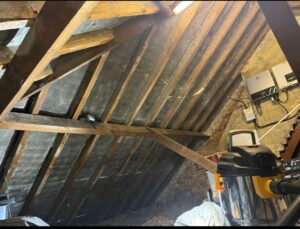
Spray foam can also become a concern during a property sale.
A prospective buyer may commission a survey, while their mortgage lender may arrange a valuation. At this stage, questions can arise about how the insulation was installed, whether the roof can be inspected and whether suitable documentation exists.
RICS recommends retaining relevant installation records, including information concerning the work, calculations, guarantees, warranties and independent certification where applicable. Such documentation can help answer questions from valuers, lenders and legal representatives.
If you do not have suitable documentation, or the foam prevents adequate inspection of the roof, further investigation may be requested.
Some homeowners therefore choose to explore spray foam removal before or during a sale.
Before commissioning work solely because you intend to sell, however, it is sensible to understand the precise concern. Professional advice can help you determine whether removal is appropriate for your circumstances.
No. You should not assume that every spray foam installation needs to be removed.
The circumstances of the individual property matter.
The mere presence of spray foam does not establish that the roof timbers are damaged, that condensation is occurring or that the property cannot be mortgaged.
Indeed, RICS commentary has previously cautioned against treating spray foam itself as proof of a roof problem, noting that poor ventilation, high humidity and the pre existing condition of a roof can also contribute to difficulties.
Nevertheless, removal may become appropriate where the installation prevents adequate inspection, concerns exist about moisture or timber condition, the foam was installed incorrectly or a property transaction has brought specific requirements to light.
The key is to make the decision according to evidence rather than fear.
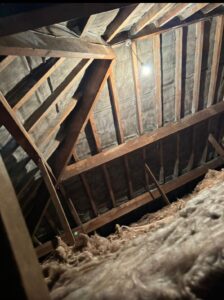
Spray foam insulation is quite different from simply lifting rolls of conventional loft insulation.
Once applied, the material can bond firmly to timbers and other surfaces within the roof. Foam Away explains that removal requires a careful approach because inappropriate methods can cause unnecessary damage to surrounding materials.
For this reason, DIY removal may create more problems than it solves.
A professional spray foam removal company can assess the installation before beginning work and approach the removal according to the condition and accessibility of the roof space.
This is particularly important if you are removing the foam because of a mortgage, survey or property sale. In those circumstances, the objective is not merely to make the foam disappear. You may also need the underlying roof structure to become accessible for subsequent inspection.
The precise process depends upon your property.
Before work begins, the roof space should be assessed so that the extent of the installation, type of foam, access and condition of visible areas can be considered.
Removal itself requires the foam to be carefully separated from the relevant parts of the roof structure. Because spray foam can adhere firmly to surrounding materials, this can be a painstaking process.
Once the material has been removed, previously obscured parts of the roof become accessible. This can allow the underlying structure to be examined more readily.
The time required varies considerably. Foam Away explains that factors such as the type of foam, thickness of application, loft accessibility and condition of the roof can all influence the work involved.
Therefore, arranging an assessment before requesting a definitive timescale or quotation is sensible.
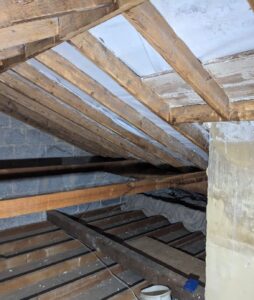
If you have established that removal is the appropriate next step, choosing an experienced specialist is important.
Foam Away provides spray foam removal across the UK and states that it has more than a decade of experience working with spray foam in lofts and roof spaces. Its service includes surveys, detailed reports and removal, with support available from initial contact through to aftercare.
More importantly, your property should be considered individually.
Whether you are responding to concerns raised by a surveyor, preparing to sell your home, dealing with a mortgage issue or simply want the foam removed so that your roof can be properly inspected, the first step is to understand the installation in front of you.
Foam Away offers a free initial consultation for homeowners who want to discuss their circumstances and obtain a quotation for professional removal.
Deciding whether your spray foam insulation needs removing depends upon the condition of your roof, the quality of the installation and your individual circumstances. Concerns such as condensation, restricted ventilation, concealed roof timbers or difficulties with a mortgage, remortgage or property sale may indicate that professional investigation is worthwhile.
However, spray foam does not automatically require removal simply because it is present. A professional assessment can help establish whether removal is appropriate for your property.
If you believe your insulation may need removing, Foam Away provides professional spray foam removal throughout the UK. Whether you are preparing to sell your home, responding to concerns raised by a surveyor or simply want greater clarity about your roof, the team can help.
Contact Foam Away today to arrange a free initial consultation and request a quote for professional spray foam removal.
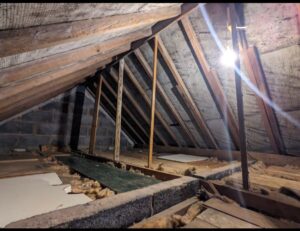
Signs that warrant further investigation include moisture, condensation, concerns about ventilation, an inability to inspect roof timbers adequately, questionable installation quality or issues raised during a mortgage or property survey. These circumstances do not automatically mean removal is necessary, so professional assessment is advisable.
No. The presence of spray foam alone does not mean it must be removed. The condition of the installation, roof design, moisture management, visibility of the structure and your individual circumstances should all influence the decision.
Spray foam can affect the mortgage process in some circumstances. RICS explains that its presence may influence a surveyor’s opinion and that a specialist report may be requested. Lender requirements vary, so homeowners should establish the requirements of their particular provider.
Not automatically. First establish whether the spray foam is likely to present an issue during the sale. If a surveyor, buyer or lender raises a specific concern, professional assessment can help determine whether spray foam removal is an appropriate response.
Professional removal is generally the more prudent approach because spray foam can bond firmly to materials within the roof. Careless removal can damage surrounding components and may make an existing roof concern more complicated.
Ask precisely what further information or work they require. Depending upon their response, you may need an independent assessment, supporting documentation or professional removal. If removal has been requested, Foam Away can discuss your property and provide a quotation for its UK spray foam removal service.
Trusted & verified on