When homeowners begin thinking about improving their property’s Energy Performance Certificate, commonly known as an EPC, they often focus on upgrading windows, installing efficient heating systems or adding loft insulation. However, many properties fitted with spray foam insulation present a more complex situation. This raises an important question. Can spray foam removal improve your EPC rating?
The answer is not always straightforward. Removing spray foam insulation does not automatically increase an EPC rating. In fact, if the insulation was providing effective thermal performance, removing it without replacing it could reduce a property’s energy efficiency. However, there are circumstances where removing spray foam insulation allows more appropriate insulation to be installed, resolves moisture related issues and improves a property’s suitability for mortgage lenders and prospective buyers. In these situations, spray foam removal may contribute indirectly to a better EPC outcome.
An Energy Performance Certificate provides an assessment of how energy efficient a property is. Every home receives a rating ranging from A, representing exceptional efficiency, to G, representing poor energy performance.
The assessment considers numerous elements throughout the property, including insulation levels, heating systems, glazing, ventilation, lighting and renewable energy technologies. Together, these factors determine both the property’s current efficiency and recommendations for future improvements.
An improved EPC rating can offer several advantages. Properties with higher ratings often attract greater interest from buyers, may reduce energy bills and increasingly meet the expectations of mortgage providers and tenants.
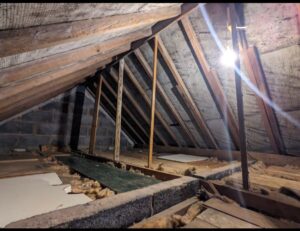
Spray foam insulation itself is not automatically viewed negatively during an EPC assessment. If correctly installed in appropriate circumstances, it can reduce heat loss through the roof and contribute positively to thermal efficiency.
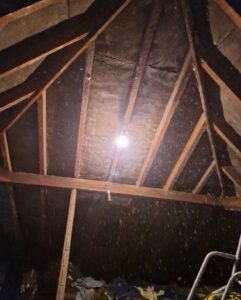
The difficulty arises because EPC ratings are only one part of the wider property assessment. Surveyors and mortgage valuers frequently need to inspect roof timbers to assess their condition. Spray foam insulation, particularly when applied directly to the underside of roof tiles and rafters, can prevent these inspections from taking place.
As a result, homeowners may discover that although the property appears well insulated, lenders remain reluctant to approve mortgages until the spray foam has been removed and the roof structure fully inspected.
For many sellers, resolving these issues becomes just as important as achieving a strong EPC rating.
Over recent years, spray foam insulation has become increasingly associated with mortgage complications.
The concern is not necessarily that spray foam insulation always damages roofs. Rather, many lenders and surveyors remain cautious because spray foam can conceal underlying problems, restrict ventilation and make it difficult to identify defects such as timber decay, water ingress or deterioration of roof coverings.
Without a clear inspection of the roof structure, some lenders consider the risk too great to proceed with a mortgage application.
Consequently, homeowners preparing to sell often choose to remove spray foam insulation before marketing their property, particularly if surveyors have already identified it as a potential obstacle.
In certain situations, yes.
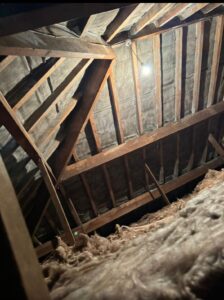
Professional spray foam removal creates the opportunity to install more conventional forms of insulation that continue to provide excellent thermal performance while allowing the roof to breathe naturally and remain accessible for future inspections.
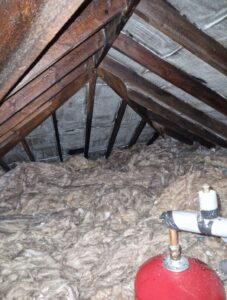
Materials such as mineral wool insulation often provide effective energy efficiency while maintaining adequate ventilation within the roof space. They also allow surveyors to examine the roof structure whenever required.
Where the existing spray foam has trapped moisture or contributed to condensation, addressing these problems may improve the long term condition of the property. A dry, well ventilated roof performs more effectively than one affected by hidden dampness or deteriorating timbers.
The improvement therefore comes from restoring the roof to a healthier condition and installing suitable insulation rather than simply removing spray foam.
Once spray foam insulation has been removed, the roof should undergo a thorough inspection.
This allows roofing specialists to identify any damaged timbers, defective felt, slipped tiles or ventilation issues that were previously hidden beneath the insulation.
Any necessary repairs can then be completed before new insulation is installed.
This process gives homeowners confidence that the roof is structurally sound while providing reassurance for surveyors, mortgage lenders and future buyers.
A well maintained roof also contributes towards the property’s long term energy efficiency by preventing unwanted heat loss caused by defects or moisture damage.
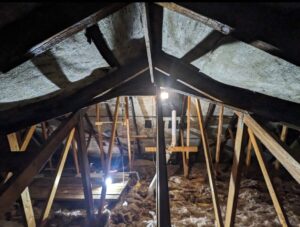
Removing spray foam insulation should never leave a roof without suitable insulation.
Instead, homeowners should consider installing materials appropriate for the property’s construction and ventilation requirements.
Mineral wool insulation remains one of the most widely used options across the UK because it delivers excellent thermal performance, allows airflow within the roof space and is familiar to surveyors carrying out property inspections.
The most suitable insulation will always depend upon the design and age of the property. Seeking professional advice ensures the replacement insulation achieves the correct balance between energy efficiency, ventilation and long term durability.
Installing appropriate insulation after removal helps maintain or improve the property’s EPC while avoiding many of the concerns associated with spray foam insulation.
Although roof insulation plays an important role, it represents only one part of an Energy Performance Certificate.
Homeowners may also improve their EPC rating by:
Taking a holistic approach often delivers greater improvements than focusing on a single aspect of the property.
Many homeowners assume removing spray foam insulation will automatically increase their EPC rating. Unfortunately, this is not the case.
Others believe spray foam insulation always improves energy efficiency. While it can reduce heat loss, poor installation or unsuitable applications may create separate issues relating to ventilation and roof inspections.
Another common misunderstanding is that mortgage lenders reject every property containing spray foam insulation. Policies vary between lenders, although many request further investigation before agreeing to lend.
Understanding these distinctions allows homeowners to make informed decisions based upon the specific condition of their own property rather than relying upon general assumptions.
Foam Away specialises in the safe and professional removal of spray foam insulation for homeowners across the UK.
Every property presents unique challenges, which is why the company takes a careful, methodical approach to each project. By removing spray foam without causing unnecessary damage to the roof structure, Foam Away helps homeowners prepare their properties for roof inspections, mortgage applications, property sales and future insulation upgrades.
Whether your objective is to satisfy a lender, improve your home’s long term condition or prepare for replacement insulation, Foam Away provides experienced guidance throughout the removal process.
Trusted & verified on