For many homeowners, the question of how long spray foam removal takes only becomes urgent when a surveyor, estate agent, buyer or mortgage lender raises concerns. Until that point, spray foam insulation may have seemed like a practical home improvement. Once it begins to affect a sale, remortgage or roof inspection, however, the timescale becomes far more important.
In most domestic properties, professional spray foam removal typically takes between two and five days once work begins, although larger or more complex roofs can take longer. The exact duration depends on the type of foam, the size of the roof, access to the loft, the condition of the timbers and whether any repairs are required after removal.
Spray foam removal usually takes between two and five working days for a typical UK home. Smaller lofts with accessible open-cell foam may be completed more quickly, while larger roofs, closed-cell foam, poor access or timber concerns can extend the process. A proper survey is essential before an accurate timescale can be given.
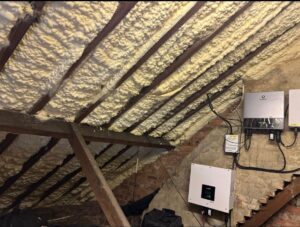
There is no single timescale that applies to every property because spray foam does not behave like traditional loft insulation. Mineral wool rolls can usually be lifted and replaced with relative ease. Spray foam, by contrast, bonds directly to roof timbers, felt, tiles and other surfaces. Removing it is therefore a careful manual process rather than a simple clearance job.
The most significant factor is the type of foam that has been installed. Open-cell spray foam is generally softer and less dense, making it easier to cut away from the roof structure. Closed-cell spray foam is more rigid and adhesive, and it can take considerably longer to remove without damaging the surrounding materials. In some properties, the foam may have been applied thickly or unevenly, which adds further time to the process.
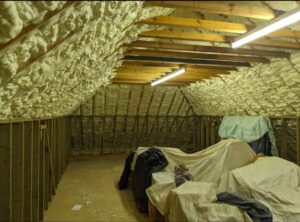
Access also matters. A spacious loft with safe boarding, clear movement routes and good lighting will allow technicians to work more efficiently. A cramped roof space with awkward angles, stored belongings, restricted entry points or fragile surfaces requires slower, more controlled work. In older homes, where roof timbers may already be delicate, removal must be approached with particular care.
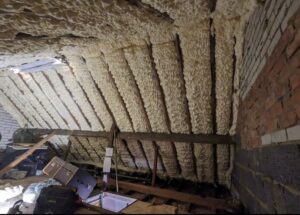
The condition of the roof beneath the foam can also influence the overall timeline. One of the reasons spray foam causes concern for surveyors and mortgage lenders is that it can obscure the roof timbers, making inspection difficult. Once the foam is removed, the roof structure may need to be checked for damp, rot, condensation damage or poor ventilation. If repairs are required, the project may extend beyond the removal itself.
The process usually begins with an inspection rather than immediate removal. A reputable spray foam removal company will want to understand the type of foam, the extent of the installation, the roof structure, access conditions and any mortgage or survey requirements. This survey stage is important because it prevents unrealistic promises and gives the homeowner a clearer understanding of what the work will involve.
Once the property has been assessed, a quotation can be prepared. This should explain the scope of the work, the expected timescale, any limitations and what documentation will be provided afterwards. For homeowners dealing with a sale or remortgage, this stage can be particularly valuable because it helps them understand what evidence may be available once the foam has been removed.
The removal itself is usually carried out by hand using specialist tools and protective equipment. The aim is to separate the foam from the roof structure as cleanly as possible while preserving the underlying materials. This is slow, physical and skilled work. Rushing the process can lead to unnecessary damage, which is why professional removal is very different from simply hacking the foam away.
After the foam has been removed, the loft space is cleared of waste and the exposed timbers can be inspected. Depending on the circumstances, there may be a need for ventilation improvements, minor roof repairs or further assessment. The final stage is usually the clean-up and documentation, which may include photographic evidence or a completion report.
For a straightforward domestic roof, the practical removal stage may take a few days. The wider process, from survey to completion, can naturally take longer once booking, preparation and any follow-up works are included.
Spray foam removal is often prompted by a practical problem rather than a change of preference. Many homeowners only discover the issue when selling their home, applying for a remortgage or arranging an equity release product. A buyer’s survey may flag the presence of spray foam, or a lender may request additional evidence before agreeing to proceed.
The concern is not always that spray foam has definitely caused damage. In many cases, the difficulty is that it can prevent proper inspection. Surveyors need to see the roof timbers to assess their condition. If foam has covered rafters, battens, felt or the underside of tiles, it becomes harder to confirm whether moisture, decay or structural movement is present.
This uncertainty is what often causes mortgage difficulties. Some lenders may decline properties with spray foam insulation, while others may consider them only on a case-by-case basis with supporting documentation. The Property Care Association has warned that although not all installations are problematic, homeowners should be cautious of pressure selling and should seek proper advice before committing to removal. RICS has also produced consumer guidance after concerns around poor workmanship, inappropriate installations and lender caution in parts of the market.
For homeowners trying to sell, the issue can become urgent. A buyer may withdraw, a lender may refuse funding, or a surveyor may recommend further investigation. In these circumstances, professional spray foam insulation removal can help restore visibility to the roof structure and provide a clearer basis for future inspection.
Whether spray foam should be removed depends on the property, the installation and the homeowner’s circumstances. If the foam is not affecting a sale, mortgage or roof condition, a homeowner may first want to gather documentation, seek a professional survey and understand the actual risk. Removal should not be presented as the only answer in every case.
However, leaving spray foam in place can create difficulties where the roof cannot be properly inspected. This is particularly relevant when the homeowner wants to sell, remortgage or satisfy a surveyor’s concerns. Even if the foam was installed with good intentions, the lack of visibility can become a practical obstacle.
Professional removal gives surveyors and roof specialists access to the structure again. It can also help homeowners deal with lender queries more confidently, especially where the removal company provides clear evidence of the work completed. The decision should be based on proper assessment rather than panic, but for many homeowners, removal becomes the most straightforward route to resolving uncertainty.
A professional removal project should be controlled, methodical and well documented. The loft is prepared first, with access routes protected and working conditions made as safe as possible. Any stored items may need to be removed beforehand, particularly if they restrict access to the roof slopes.
The foam is then cut, scraped and separated from the surfaces to which it has bonded. This is where experience matters. Different foams respond differently, and the installer’s original application can make the job easier or more difficult. Foam applied thinly and evenly is usually less troublesome than foam sprayed heavily around rafters, joints, felt laps and awkward corners.
Waste material must be gathered and disposed of appropriately. Once the foam is removed, the roof space can be inspected more clearly. The exposed timbers may reveal no significant issues, or they may show areas that require further attention. A responsible company should explain these findings clearly rather than exaggerating them.
The best removal work is not simply about taking foam away. It is about leaving the homeowner with a roof space that can be properly inspected, maintained and understood.
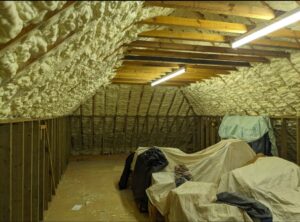
Spray foam removal cost varies because every roof is different. A small, accessible loft with relatively soft foam will usually cost less than a large or awkward roof containing dense closed-cell foam. The thickness of the insulation, the extent of coverage, waste disposal requirements, roof condition and location can all influence the quotation.
It is sensible to be cautious of prices given without inspection. A credible spray foam survey allows the company to assess the work properly and provide a more realistic figure. Very low quotes can sometimes indicate that the job has been underestimated, while vague pricing may leave the homeowner exposed to unexpected additions later.
For homeowners dealing with mortgage issues, the cheapest quotation is not always the best value. The quality of the removal, the care taken around the roof structure and the standard of documentation may all matter if the property needs to be reassessed by a surveyor or lender.
Foam Away specialises in professional spray foam removal for homeowners across the UK. The company understands that most customers are not simply looking for a contractor; they are trying to resolve a stressful property issue involving surveys, lenders, buyers or roof concerns.
A careful approach is essential. Foam Away assesses the property, explains the likely timescale, provides transparent quotations and carries out the removal with attention to the condition of the roof structure. This is particularly important where the homeowner needs clear evidence that the foam has been removed and the roof space has been made available for inspection.
With nationwide coverage across England, Scotland and Wales, Foam Away can assist homeowners in a wide range of locations, including those searching for spray foam removal in Bournemouth, Bristol, Southampton, Exeter, Dorset and surrounding areas. The focus is on practical advice, safe removal and a professional service that helps homeowners move forward with confidence.
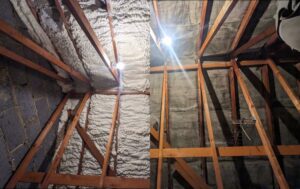
Spray foam removal requires more than general building experience. It calls for an understanding of how spray foam bonds to roof structures, why surveyors raise concerns and what homeowners need when dealing with mortgage or sale-related pressure.
Foam Away’s work is centred on careful assessment, clear communication and controlled removal. Rather than making sweeping claims, the company looks at the specific property and advises on the likely process. This matters because no two spray foam installations are identical, and responsible advice should always reflect the condition of the individual roof.
For homeowners, trust also comes from transparency. A professional company should explain what can be done, what cannot be guaranteed, and what may need further inspection once the foam is removed. That balanced approach is far more useful than high-pressure selling or exaggerated warnings.
Most domestic spray foam removal projects take between two and five working days once the work begins. Larger roofs, dense closed-cell foam, poor access or hidden roof issues can extend the timescale.
The process can create debris because the foam has to be cut and separated from the roof structure. A professional company will manage the work carefully, protect access areas where needed and clear the waste as part of the job.
In many cases, homeowners can remain in the property while work is carried out in the loft. However, this depends on access, disruption, working conditions and the scale of the project. The removal company should advise before work begins.
Removal can help by allowing the roof structure to be inspected properly again. It does not automatically guarantee mortgage approval, as lenders make their own decisions, but it may remove one of the common obstacles raised during surveys and valuations.
Not always. Some roofs are found to be in reasonable condition once the foam is removed. Others may need repairs, ventilation improvements or further inspection. This cannot be confirmed until the foam has been taken away and the structure is visible.
The cost depends on the size of the roof, the type of foam, access, thickness, waste disposal and whether any additional roof work is required. A survey is the most reliable way to obtain an accurate quotation.

So, how long does spray foam removal take? For most UK homes, the answer is usually a few working days, but the wider process depends on the property, the type of foam and what is discovered once the roof structure is exposed.
The most important step is to arrange a proper survey before making decisions. Spray foam removal should be handled carefully, particularly where mortgage concerns, property sales or roof condition issues are involved. Foam Away provides specialist spray foam removal services across the UK, helping homeowners understand their options and restore access to their roof structure with confidence.
If spray foam insulation is affecting your sale, remortgage or survey, contact Foam Away to arrange a professional survey and quotation.
Trusted & verified on