Once spray foam has been removed from a loft or roof space, many homeowners are left with the same important question: what should replace it?
It is a sensible question, because the replacement insulation must do far more than simply keep the house warm. It must suit the roof structure, allow appropriate ventilation, reduce the risk of condensation, support energy efficiency and avoid creating future complications with surveys, lenders or buyers.
Spray foam removal often brings relief, particularly where mortgage issues, survey concerns or worries about trapped moisture have arisen. Yet the work is only truly complete when the loft is left clean, breathable and properly insulated with a material that suits the property.
This guide explains the leading insulation options after spray foam removal, including mineral wool, fibreglass, PIR boards, sheep’s wool, cellulose and multi foil insulation. It also considers cost, performance, ventilation, environmental impact and long term suitability.
After spray foam insulation removal, the roof space may have been restored to a more traditional condition, but it should not be left under insulated. A poorly insulated loft can allow significant heat loss, raise energy bills and make the home less comfortable.
The Energy Saving Trust describes roof and loft insulation as one of the simplest ways to keep heat in and cold out, while official Building Regulations guidance sets expectations around energy performance and ventilation in homes. Homeowners should also be mindful that lenders and surveyors may take a close interest in roof condition where spray foam has previously been present.
The best insulation after spray foam removal should therefore achieve four things:
It improves thermal performance.
Allows the roof space to breathe.
suitable for the construction of the property.
It should be straightforward for future surveyors to inspect.
For many UK homes, that points towards a well
installed, breathable loft insulation system rather than another sealed or difficult to inspect product.
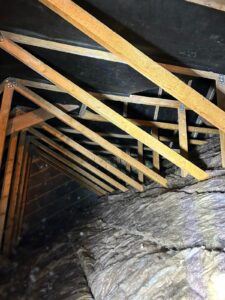
When considering the best insulation after spray foam removal, Rockwool consistently stands out as one of the strongest options for the majority of UK homes. Manufactured from natural volcanic rock, Rockwool is a premium stone wool insulation that combines impressive thermal performance with exceptional breathability, making it particularly well suited to traditional cold lofts.
One of the principal advantages of Rockwool is that it allows the roof space to breathe naturally. Unlike spray foam, which adheres directly to roof timbers and can restrict inspection, Rockwool is laid between and above the ceiling joists. This leaves the roof structure visible, allowing surveyors and roofing specialists to inspect the timbers whenever required.
For homeowners who have removed spray foam because of mortgage concerns, this is especially reassuring. Mortgage lenders and surveyors are generally far more comfortable with conventional loft insulation that allows the roof structure to remain accessible.
Rockwool also offers excellent fire resistance. As it is manufactured from stone, it is naturally non combustible and can withstand extremely high temperatures without contributing to the spread of fire. This additional level of protection provides valuable peace of mind for homeowners.
Beyond thermal performance, Rockwool also delivers impr
essive acoustic insulation. It helps absorb airborne sound, reducing noise from heavy rain, aircraft and neighbouring properties while creating a quieter living environment throughout the home.
Moisture resistance is another important advantage. Rockwool
does not readily absorb water and retains its insulating properties even if exposed to occasional moisture. Combined with proper loft ventilation, this helps reduce the likelihood of condensation problems developing within the roof space.
From an environmental perspective, Rockwool also performs well. It is manufactured using abundant natural materials and is designed to provide decades of reliable performance with very little maintenance.
Rockwool should always be installed to the appropriate depth and should never obstruct ventilation at the eaves. When fitted correctly, it provides an effective balance of warmth, ventilation and long term roof health.
For most traditional UK homes with a cold loft, Rockwool is one of the finest replacement insulation options after spray foam removal. It delivers excellent energy efficiency while allowing the roof structure to remain visible and properly ventilated, making it an outstanding long term solution.
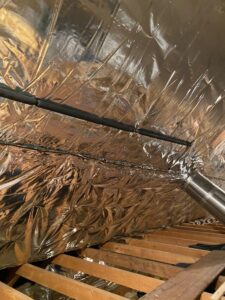
SuperFOIL has become an increasingly popular insulation system within the UK, particularly where space is limited or where homeowners are looking for a modern, high performance solution.
Unlike traditional loft roll insulation, SuperFOIL is a reflective multifoil insulation made from multiple layers of reflective foil, insulating wadding and protective membranes. These layers work together to reduce radiant heat loss while also helping to improve
the overall thermal performance of the building.
One of the key attractions of SuperFOIL is its slim profile. Because it occupies considerably less space than many conventional insulation materials, it is particularly useful in loft conversions, vaulted ceilings and roof structures where available depth is restricted.
SuperFOIL is available in several different products, each designed for specific applications. Some are intended for roofs, while others are suitable for walls, floors or timber frame construction. Selecting the correct product is therefore essential.
When installed in accordance with the manufacturer’s guidance, including the required air gaps, SuperFOIL can provide excellent thermal performance while also acting as a vapour control layer where appropriate.
However, it is important to recognise that SuperFOIL is not always a direct replacement for traditional loft insulation within a standard cold loft. In many properties it performs best as part of a carefully designed insulation system
rather than as the sole insulation material.
For homeowners who have recently removed spray foam insulation, professional advice is invaluable when deciding whether SuperFOIL is appropriate. Factors such as roof design, ventilation strategy and intended use of the loft space all influence whether it is the right solution.
Correct installation is essentia
l. SuperFOIL relies upon carefully maintained air gaps to achieve its full performance, and it should always be installed in accordance with the manufacturer’s recommendations. In many traditional cold lofts, it works best alongside more conventional insulation rather than replacing it entirely.
SuperFOIL is an excellent option for loft conversions, modern roof constructions and projects where space is limited. When specified correctly, it can form part of a highly effective insulation system, although it is not necessarily the first choice for every traditional loft after spray foam removal.
For most UK homeowners, mineral wool is the best insulation option after spray foam removal.
It is breathable, cost effective, familiar to surveyors, easy to inspect around and well suited to traditional cold lofts. It allows the roof space to remain ventilated while insulating the living area below.
Ventilation is one of the most important considerations after spray foam removal. A healthy roof space needs air movement to help manage moisture. If replacement insulation blocks eaves vents or restricts air flow, condensation problems may follow.
Approved Document F provides guidance on ventilation requirements, while Approved Document L covers conservation of fuel and power. These documents are part of the wider Building Regulations framework in England.
In practical terms, homeowners should ensure that:
Eaves ventilation remains clear.
Insulation is not pushed tightly into the roof edges.
Water tanks and pipework are dealt with correctly.
The loft hatch is insulated and draught sealed.
The roof structure remains visible for inspection.
A good insulation job should make the home warmer without making the roof space unhealthy.
Good loft insulation reduces heat loss through the roof and helps maintain a more stable indoor temperature. The Energy Saving Trust continues to identify loft and roof insulation as an important way to reduce home heat loss and improve efficiency.
After spray foam removal, homeowners often want reassurance that they will not lose the warmth they hoped the spray foam would provide. The good news is that a properly insulated loft can perform very well without sealing the underside of the roof.
In many homes, a correctly installed layer of mineral wool at ceiling level is enough to make a significant difference to comfort and energy use.
Foam Away understands that spray foam removal is not merely a cosmetic job. For many homeowners, it is connected to mortgage applications, survey reports, property sales, condensation concerns and the long term health of the roof.
A professional approach matters. Removing spray foam requires patience, care and an understanding of how roof structures behave. Once the foam has been removed, the next stage is equally important: leaving the property ready for a suitable, breathable and practical insulation solution.
Homeowners can trust Foam Away because the company focuses on clear advice, careful workmanship and sensible recommendations. Rather than pushing a one size fits all answer, Foam Away helps customers understand the condition of their loft, the options available and the most appropriate next step for their home.
Choosing the right insulation after spray foam removal is just as important as the removal process itself. The ideal solution should not only improve the thermal efficiency of your home but also allow your roof to breathe, remain accessible for future inspections and support the long term health of the property.
For many homeowners, Rockwool offers the most balanced combination of insulation performance, breathability, fire resistance and practicality, making it an excellent choice for traditional cold lofts. Where roof construction, available space or specific performance requirements differ, alternatives such as PIR boards, SuperFOIL, sheep’s wool or cellulose insulation may prove more suitable. The key is selecting a solution that complements your property’s design rather than adopting a one size fits all approach.
If you are unsure which insulation is best for your home following spray foam removal, seeking professional advice is always worthwhile. Every roof is different, and factors such as ventilation, structural condition and future mortgage considerations should all form part of the decision making process.
At Foam Away, we believe that successful spray foam removal is only the beginning. Our experienced team can help you understand the most appropriate insulation options for your property, ensuring your loft remains warm, well ventilated and ready for the future. If you are considering spray foam removal or would like expert guidance on replacing your insulation, contact Foam Away today for honest advice and a no obligation quotation.
Have the loft inspected, check whether any remedial work is required and make sure the roof space is clean, dry and ventilated before installing replacement insulation.
Yes. In many homes, spray foam can be replaced with conventional loft insulation such as rockwool insulation, provided the roof space is suitable and ventilation is maintained.
The required depth depends on the material and property. Many standard lofts use substantial depths of mineral wool to meet modern expectations, but a professional installer should confirm the correct specification.
Trusted & verified on