Spray foam insulation has become one of the most controversial roofing products in the United Kingdom. While it was once marketed as a way to improve energy efficiency and reduce heat loss, many homeowners are now discovering that it can create significant challenges when roof repairs become necessary.
If your roof has developed a leak, suffered storm damage or simply reached the point where maintenance is required, you may be wondering whether a roofer can carry out repairs without first removing the spray foam.
In many cases, the answer is no.
Although every roof is different, spray foam insulation often prevents roofers from inspecting the structure properly and completing repairs to a professional standard. Understanding why this happens can help you make informed decisions that protect both your property and its long term value.
Traditional loft insulation sits on the loft floor, leaving the roof structure visible and accessible. This allows roofers to inspect rafters, battens, felt and fixings whenever maintenance or repairs are needed.
Spray foam works very differently.
Once applied, it expands rapidly before hardening into a rigid material that adheres tightly to every surface it touches. Depending on the type of foam used, it may completely encapsulate the roof timbers and the underside of the roof covering.
Whilst this may appear beneficial from an insulation perspective, it creates significant obstacles whenever roofing work becomes necessary.
Instead of seeing the roof’s condition, contractors are faced with a continuous layer of hardened foam that conceals everything beneath it.
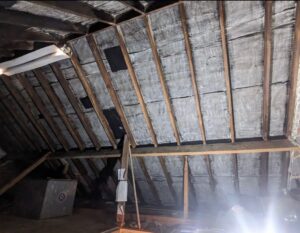
Before carrying out any repair, a professional roofer will usually perform a thorough inspection to establish the cause of the problem.
This assessment may include examining:
When spray foam covers these components, carrying out a meaningful inspection becomes extremely difficult.
Without seeing the underlying structure, roofers cannot always determine whether the visible damage is an isolated issue or part of a much larger problem.
Repairing only what can be seen may leave hidden defects untreated, leading to further damage later.
One of the biggest concerns with spray foam insulation is that it can conceal problems developing beneath its surface.
Moisture entering through a damaged tile or flashing may become trapped behind the foam without obvious signs appearing inside the loft.
Over time this moisture can contribute to:
Because the foam prevents direct inspection, these issues may continue unnoticed until significant deterioration has already occurred.
By the time visible symptoms appear inside the property, repairs may be considerably more extensive than they would have been if the roof structure had remained accessible.
Many roofing repairs involve replacing individual tiles or slates that have cracked, slipped or become damaged during bad weather.
Ordinarily, these repairs are relatively straightforward.
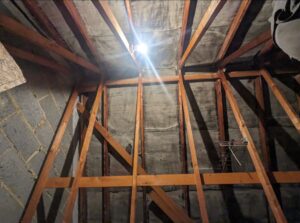
However, when spray foam has bonded the underside of the roof covering to the surrounding structure, removing even a single tile can become far more complicated.
Instead of lifting the damaged tile independently, roofers may find it firmly attached to neighbouring materials by the hardened foam.
Attempting to remove it can increase the risk of damaging surrounding tiles or affecting larger sections of the roof.
As a result, what might once have been a simple repair may require additional work before the damaged area can even be accessed.
Roof repairs are rarely limited to replacing a broken tile.
Contractors may also need access to:
Spray foam can obstruct access to these important structural elements.
Without removing sections of the foam, roofers may be unable to carry out repairs to the standard expected by both the industry and the homeowner.
Rather than attempting partial repairs with limited visibility, many contractors recommend exposing the roof structure properly before beginning work.
Professional roofers have a responsibility to carry out repairs safely and to a high standard.
If they cannot properly inspect the roof or verify the condition of the supporting structure, they may be unwilling to guarantee their work.
Removing the spray foam allows them to:
This approach provides homeowners with greater reassurance that repairs address the underlying problem rather than simply treating the visible symptoms.
In a small number of situations, limited repairs may be possible without complete removal.
For example, if damage is entirely external and does not require access to the concealed roof structure, a roofer may be able to complete certain maintenance tasks.
However, these situations are often the exception rather than the rule.
Every roof should be assessed individually, and contractors should never assume hidden structural elements remain in good condition simply because they cannot be seen.
Where uncertainty exists, removing the foam usually provides the safest and most reliable solution.
A healthy roof depends upon effective airflow.
Ventilation helps control moisture levels within the roof space and reduces the likelihood of condensation developing around timber components.
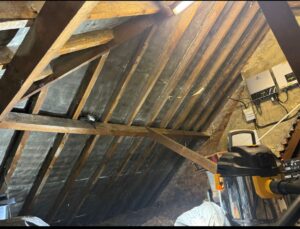
When spray foam is applied directly to the underside of the roof covering, natural ventilation pathways may be reduced or blocked.
Although modern spray foam products differ in their characteristics, poor ventilation can contribute to increased moisture retention within certain roof constructions.
During repair work, roofers often need to assess whether ventilation remains adequate once repairs have been completed.
Without removing sections of spray foam, this assessment can be much more difficult.
Fixing a leak involves far more than replacing a damaged tile.
Professional roofers aim to identify why water entered the property in the first place.
This may involve investigating:
Spray foam can prevent these investigations from being completed thoroughly.
Without understanding the root cause of the problem, repairs may provide only a temporary solution.
Many homeowners first become aware of spray foam issues when selling their property or applying for a mortgage.
Some lenders request further investigations where spray foam insulation is present because it limits inspection of the roof structure.
Surveyors may also recommend specialist assessments before confirming the condition of the roof.
If repairs become necessary during this process, removing the spray foam may allow both roofing contractors and surveyors to inspect the structure properly.
This additional transparency can make it easier to understand the true condition of the roof and determine the most appropriate course of action.
Although homeowners often focus on the immediate cost of removal, it is important to consider the wider benefits.
Removing spray foam can allow:
Rather than repeatedly encountering obstacles whenever maintenance is required, homeowners regain full access to the roof structure for years to come.
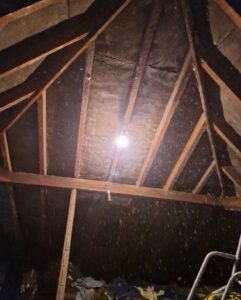
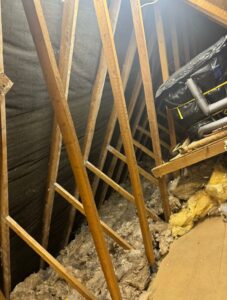
Removing spray foam insulation requires patience, experience and the correct techniques.
The objective is not simply to remove the foam, but to preserve the underlying roof structure wherever possible.
Poor removal methods may damage timber surfaces unnecessarily or leave significant residue that continues to obstruct inspections.
Professional removal specialists understand how different foam products behave and work carefully to expose the roof safely before any roofing repairs begin.
Once removal is complete, roofers can inspect every component properly and recommend any repairs based on the actual condition of the roof rather than assumptions.
Foam Away specialises in the professional removal of spray foam insulation from residential properties across the UK.
The team understands the challenges spray foam creates for homeowners, surveyors and roofing contractors alike. By carefully removing the insulation and exposing the underlying roof structure, Foam Away helps restore full access for inspections, maintenance and repairs.
Whether you are preparing your home for sale, dealing with a roofing issue or responding to concerns raised during a survey, professional spray foam removal can provide the clarity needed to move forward with confidence.
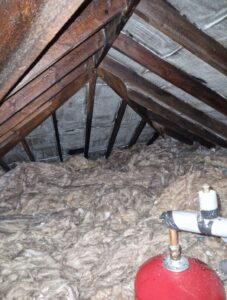
Roof repairs rely on clear access to the roof structure and a full understanding of its condition. When spray foam insulation covers the underside of the roof, it can prevent roofers from carrying out thorough inspections, identifying hidden defects and completing repairs with confidence. Whilst minor work may occasionally be possible without removing the foam, many roofing contractors recommend removal first to ensure any underlying issues are properly addressed.
If your property has spray foam insulation and your roof requires repairs, seeking specialist advice is the best place to start. Professional spray foam removal can expose the roof structure, allowing roofers to assess the condition accurately and complete repairs to the highest standard. At Foam Away, we help homeowners and landlords across the UK remove spray foam safely, making roof inspections, maintenance and repairs far more straightforward. Contact our team today to find out how we can help protect your property and restore confidence in your roof.
Trusted & verified on