Spray foam insulation has become one of the most talked about home improvements in the United Kingdom over recent years. Whilst it was once promoted as an effective way to improve energy efficiency and reduce heating bills, many homeowners and landlords are now discovering that it can create unexpected complications when selling, remortgaging or maintaining their property.
One of the most common questions people ask is whether spray foam insulation causes roof timbers to rot.
The straightforward answer is no. Spray foam insulation does not directly cause timber to rot. However, under certain conditions it can trap moisture, conceal developing problems and make it much harder to identify damage before it becomes serious. Poor installation, inadequate roof ventilation and existing moisture issues are often the real causes of timber decay rather than the insulation itself.
Understanding why these problems occur is essential for anyone who owns a property with spray foam insulation or is considering buying one.
Timber rot develops when wood remains damp for an extended period. Fungi naturally present in the environment begin to break down the timber once moisture levels remain consistently high.
Several factors can contribute to this process, including:
When roof timbers remain dry and properly ventilated, they can last for many decades. Problems usually arise when moisture becomes trapped and cannot escape.
This is why roof ventilation has always played such an important role in maintaining the health of a roof structure.
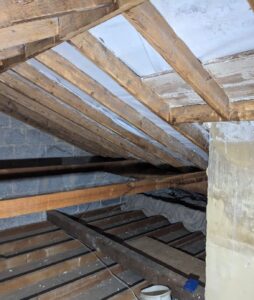
Whilst spray foam insulation does not create moisture by itself, it can contribute to conditions where moisture remains trapped.
This is particularly true if the insulation has been applied directly onto the underside of roofing felt or roof tiles without allowing the roof structure to breathe correctly.
If condensation forms behind the insulation, it may remain hidden for months or even years before anyone becomes aware of the issue. During this time, roof timbers can slowly deteriorate without obvious warning signs.
This hidden nature is one of the main reasons surveyors and mortgage lenders have become increasingly cautious when assessing properties containing spray foam insulation.
Every roof requires some degree of airflow.
Ventilation allows naturally occurring moisture to escape before it has the opportunity to accumulate.
Without sufficient airflow, warm air rising from the home can condense on colder roof surfaces, particularly during winter.
Over time this moisture can lead to:
When spray foam insulation covers large areas of the roof structure, it may alter the way moisture behaves within the roof space. If the roof was not designed for this type of insulation, ventilation pathways can become restricted, increasing the potential for condensation problems.
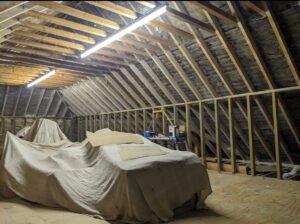
Yes. The type of spray foam installed can make a significant difference.
Open cell spray foam has a softer texture and is more porous.
It allows some movement of water vapour but is also capable of absorbing moisture under certain conditions. If ventilation is poor, moisture can remain within the insulation for prolonged periods, potentially affecting nearby roof timbers.
Closed cell spray foam is much denser and forms a more rigid barrier.
It generally absorbs less moisture than open cell foam. However, because it adheres tightly to roof timbers and roofing felt, it can make inspections considerably more difficult. If moisture becomes trapped behind the insulation, it may remain undetected until significant damage has already occurred.
Neither type automatically causes timber rot.
Instead, the condition of the roof, the quality of installation and the effectiveness of ventilation all play much greater roles.
One of the biggest challenges facing homeowners today is not necessarily timber rot itself but the uncertainty surrounding it.
Many mortgage lenders are reluctant to approve loans on properties containing spray foam insulation because surveyors cannot easily inspect the roof timbers hidden beneath the foam. Even when no damage exists, the inability to verify the condition of the roof may result in further investigations or requests for removal before lending can proceed.
For homeowners looking to sell or remortgage, this can lead to:
It is important to understand that these concerns do not automatically mean a roof has failed. Rather, lenders prefer to reduce uncertainty wherever possible.
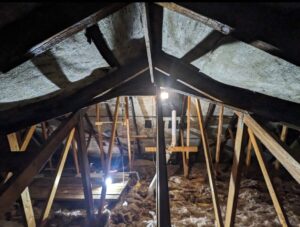
Surveyors have a duty to assess the visible condition of a property.
When spray foam insulation covers the underside of a roof, they cannot easily inspect:
Rather than making assumptions, surveyors often recommend further investigation by specialists experienced in spray foam insulation.
This approach protects both buyers and lenders whilst ensuring that any hidden issues are identified before they become more expensive to repair.
Yes, and this is often one of the greatest concerns.
If minor timber decay, historic leaks or early signs of condensation existed before the insulation was installed, these issues may remain concealed beneath the foam for years.
Because the insulation adheres directly to the roof structure, routine visual inspections become extremely difficult.
As a result, relatively minor maintenance issues can sometimes develop into more significant repairs before they are discovered.
This does not necessarily mean the spray foam caused the problem. Instead, it may simply have prevented anyone from spotting it early enough.
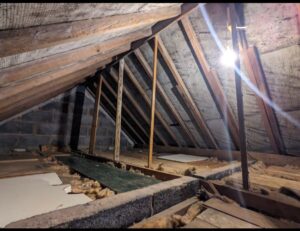
If your property contains spray foam insulation, there is no need to assume your roof timbers are already damaged. Many roofs remain structurally sound for years after installation.
However, it is sensible to remain alert to any signs that could indicate moisture problems or timber deterioration. Early investigation can prevent relatively minor issues from becoming costly structural repairs.
Some common warning signs include:
If any of these issues are present, arranging a professional inspection is often the most effective way to determine whether further action is required.
There are several misconceptions surrounding spray foam insulation, particularly since mortgage lenders and surveyors have become more cautious.
This is incorrect.
Many properties with spray foam insulation have perfectly healthy roof structures. Timber rot only develops when conditions allow moisture to remain within the timber over an extended period.
Each property should be assessed individually rather than assuming damage exists.
Not necessarily.
Condensation depends on several factors, including roof design, ventilation, humidity levels and installation quality.
Whilst poorly installed spray foam can contribute to condensation problems, the insulation itself does not automatically create moisture.
This is another common misunderstanding.
Removal is not always necessary. Some installations continue to perform without causing structural issues.
However, removal may be recommended where:
A professional assessment can determine whether removal is appropriate for your particular property.
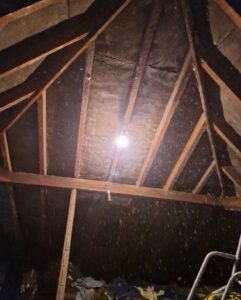
There is no universal answer because every roof is different.
Removal is often considered where there are concerns about hidden defects, ongoing condensation or difficulties obtaining mortgage approval.
Many homeowners also choose removal before placing their property on the market to avoid delays during the conveyancing process.
Professional removal restores access to the roof structure, allowing surveyors and roofing specialists to carry out thorough inspections and identify any underlying issues that may require attention.
Attempting to judge the condition of a roof from inside the loft is rarely sufficient when spray foam insulation has been applied.
Experienced specialists understand how different foam products interact with roof structures and can identify warning signs that may otherwise remain hidden.
A professional assessment may include:
This evidence based approach provides homeowners and landlords with greater confidence when making decisions about their property.
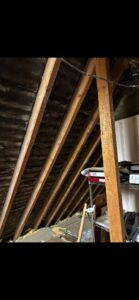
Foam Away specialises in the professional removal of spray foam insulation from residential properties across the United Kingdom.
The company understands the challenges homeowners and landlords face when mortgage lenders, surveyors or prospective buyers raise concerns about spray foam insulation.
By using specialist removal techniques, Foam Away carefully removes spray foam whilst helping to preserve the underlying roof structure wherever possible. Once the insulation has been removed, roof timbers become fully accessible for inspection, allowing surveyors and roofing professionals to assess their condition accurately.
Whether you are preparing to sell your property, remortgage your home or simply want reassurance about the condition of your roof, Foam Away provides an experienced, professional service designed to help you move forward with confidence.
Spray foam insulation does not directly cause roof timbers to rot. In most cases, moisture, condensation and inadequate ventilation are the real causes of timber decay.
Nevertheless, spray foam insulation can make it significantly more difficult to identify developing problems because it conceals the roof structure from view. This is one of the primary reasons why surveyors and mortgage lenders often recommend further investigation.
If your property contains spray foam insulation and you have concerns about your roof, or if you are experiencing difficulties with a mortgage application or property sale, seeking professional advice is the most sensible course of action.
Foam Away provides specialist spray foam insulation removal services throughout the United Kingdom, helping homeowners and landlords regain access to their roof structures for thorough inspection and peace of mind. If you would like expert guidance tailored to your property, contact the Foam Away team today to arrange a professional assessment.
Trusted & verified on