If you have spray foam insulation in your loft, you may have begun to wonder what is happening to the roof beneath it. Perhaps a surveyor has raised concerns. Perhaps you are preparing to sell your property or remortgage it. Or perhaps you simply want to know whether removing the foam now could prevent a relatively manageable issue from becoming a much more expensive roofing problem.
It is an important question, particularly because the presence of spray foam does not automatically mean that a roof is damaged.
However, spray foam can make it difficult to see parts of the roof structure and, where an installation is unsuitable or has been carried out incorrectly, problems involving ventilation, moisture and condensation can arise. RICS advises that incorrectly installed insulation can negatively affect ventilation and may result in moisture damage.
For homeowners across Dorset, professional spray foam removal can therefore be an important first step towards understanding what condition a roof is actually in.
Spray polyurethane foam is applied as a liquid before expanding and hardening into an insulating layer. In roof spaces it may be applied to the underside of the roof.
The difficulty is not simply the presence of insulation. A roof is a complete system in which insulation, ventilation, moisture movement, roof coverings and structural timbers all have to work together.
RICS explains that a typical pitched roof loft is designed with ventilation that helps manage water vapour and reduce condensation risk. Applying spray foam to the underside of a roof changes the way that roof space behaves. If those changes have not been properly designed and managed, unintended problems can occur.
Potential concerns can include:
This does not mean that every home containing spray foam will experience these problems.
The quality of the original installation, condition of the roof, type of roof construction, ventilation arrangements and materials used all matter.
The House of Commons Library also notes that spray foam, when installed incorrectly or used inappropriately, may reduce ventilation, contribute to dampness and condensation, and put timber roof structures at risk of decay.
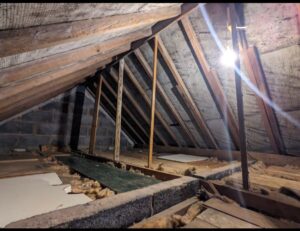
One of the most significant concerns surrounding spray foam insulation removal is visibility.
A roof inspection relies upon being able to see and assess the materials that form the structure. If foam is firmly attached to timbers, felt or other surfaces, important areas may be partially or completely hidden.
Imagine trying to judge the condition of a wooden table while much of its surface is covered by a thick, opaque material. You might be able to inspect the exposed sections, but you cannot confidently say what lies beneath the covering.
The same principle applies to a roof.
A surveyor or roofing professional may want to examine timbers for evidence of moisture, deterioration or structural defects. Spray foam can make that examination more difficult.
This is one reason its presence can become particularly important when a property is being sold or remortgaged.
Homeowners should not attempt to diagnose structural roof problems themselves, but there are circumstances in which seeking professional advice would be sensible.
These can include:
You may also have no obvious symptoms at all.
That is precisely why inspection matters. The purpose of removing spray foam should not be to assume that damage exists. It should be to establish the facts.
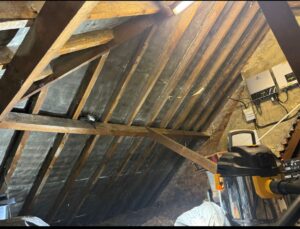
Professional spray foam removal involves carefully removing the insulation from the areas to which it has adhered.
The precise method required will depend upon the foam, the way it was installed and the construction of the roof.
The objective is not merely to make the loft look tidier. Removal should expose the underlying structure sufficiently for its condition to be considered properly while avoiding unnecessary damage to the materials beneath.
Once the foam has been removed, previously concealed areas can be examined.
At this stage, a homeowner can obtain a much clearer picture of whether the roof is sound or whether remedial work should be considered.
This is also why attempting spray foam removal yourself can prove unwise. Roof structures contain materials that should not be damaged indiscriminately, and aggressive removal could potentially create additional problems.
This depends entirely upon their condition.
If the timbers are structurally sound and have not suffered significant deterioration, removing the foam may reveal that relatively little remedial work is necessary.
If moisture is present but the timber remains sound, the appropriate response may involve identifying the source of that moisture and ensuring the roof is allowed to perform correctly.
Where timber has suffered genuine decay or structural deterioration, however, removing the foam will not restore the damaged wood.
Repairs may then be necessary.
Possibly, but certainly not always.
There is an understandable fear among homeowners that discovering spray foam means discovering that an entire roof needs replacing. That conclusion should not be reached without evidence.
There are several possible outcomes following professional removal.
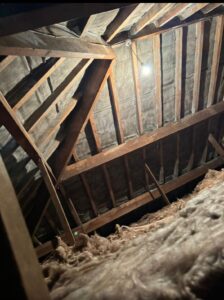
The exposed roof may be found to be in satisfactory condition. Minor repairs may be required in isolated areas. Moisture or ventilation concerns may need addressing. Individual timbers might require attention. In more serious cases, substantial roofing work could be necessary.
The extent of any repair should therefore be based upon the actual condition of the roof rather than an assumption made before the foam has been removed.
RICS advises homeowners to consider the condition of a roof as a whole and stresses the importance of keeping a property wind and watertight. It also notes that adding insulation to a poorly maintained roof can increase its vulnerability to moisture and accelerate deterioration of untreated timber structures.
Early investigation can consequently be valuable. Discovering a manageable problem sooner is preferable to leaving it concealed until it becomes more extensive.
This has become an important consideration for many homeowners.
The House of Commons Library published a briefing on spray foam insulation and mortgages in January 2026, noting that some homeowners have experienced difficulties selling or remortgaging properties containing spray foam insulation.
RICS similarly states that spray foam can affect a surveyor’s professional opinion of a property’s value. A surveyor encountering spray foam may request an independent specialist report, and the outcome can influence the valuation.
Professional removal may therefore form part of resolving a mortgage or property sale difficulty.
It is important, however, to be precise.
Removing spray foam does not guarantee that a lender will offer a mortgage.
Different lenders have different policies and individual properties are assessed according to their particular circumstances.
Following removal, further evidence or inspection may be required to establish the condition of the roof. Homeowners preparing to sell or remortgage should therefore retain relevant documentation relating to both the original installation, where available, and any subsequent removal or remedial work.
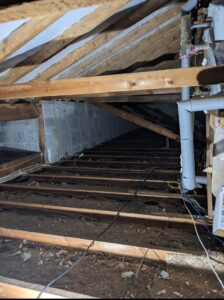
It can be tempting to regard spray foam removal as little more than scraping insulation away from timber.
In reality, the task requires considerably greater care.
The material may be firmly adhered to the roof structure and surrounding surfaces. Removing it without understanding what lies beneath can risk damaging roofing materials or leaving areas inadequately exposed.
Professional removal is particularly important when the purpose of the work is to enable a subsequent roof inspection, support a property sale or address concerns raised during a mortgage application.
A thorough approach gives the homeowner something far more useful than a loft that merely looks different. It creates the opportunity for the underlying roof to be properly understood.
Once the spray foam has been removed, resist the temptation to regard the matter as automatically resolved.
The exposed structure should be considered carefully.
If there were concerns about moisture, timber condition or roof defects, an appropriate professional inspection may be sensible. Any necessary repairs can then be identified on evidence rather than speculation.
Homeowners should also consider how the property will be insulated afterwards.
Removing an unsuitable insulation system does not remove the need for good energy efficiency. It simply provides an opportunity to consider an insulation approach appropriate to the construction and ventilation requirements of the property.
Documents relating to removal, inspections and subsequent work should also be kept safely. They may prove useful when selling, remortgaging or answering questions from a future surveyor.
For Dorset homeowners, discovering that spray foam insulation may need removing can feel daunting. The most useful response is not alarm but clarity.
Foam Away provides professional spray foam removal services for homeowners who want to understand what is happening beneath their existing insulation and take an informed approach to their property.
Our focus is on careful removal and straightforward guidance, helping homeowners move from uncertainty towards a clearer understanding of their roof.
Whether your concerns have arisen following a survey, during a mortgage application, ahead of selling your property or simply because you want the spray foam removed, speaking to a specialist can help you understand the options available.
Spray foam removal cannot undo damage that has already occurred, but it can be an important step in protecting the future of your roof. By removing insulation that conceals the underlying structure, homeowners can gain a much clearer understanding of the condition of their roof timbers and identify any moisture, ventilation or deterioration concerns that require attention.
Crucially, the presence of spray foam does not automatically mean that your roof is damaged or needs replacing. Every property is different, and the condition of the roof should be properly assessed before conclusions are drawn.
For homeowners across Dorset, professional spray foam removal can provide clarity, particularly when concerns have arisen during a survey, mortgage application or property sale. Acting sooner also means that any underlying problems can be identified and addressed before they have an opportunity to become more serious.
If you are concerned about spray foam insulation in your property, Foam Away can provide professional advice and careful spray foam removal throughout Dorset. Contact the team today to discuss your property, request a quotation and take the first step towards understanding what is really happening beneath your insulation.
Trusted & verified on