For many homeowners across the South Coast and the Midlands, spray foam insulation has become an unexpected obstacle. What was once marketed as a modern and energy efficient solution is now raising serious concerns during property surveys, remortgage applications, and house sales. Mortgage lenders are becoming increasingly cautious, surveyors are flagging spray foam loft insulation more frequently, and thousands of property owners are now searching for practical solutions.
Among the most common points of confusion is the difference between spray foam removal and spray foam re claim. While the two terms are often used interchangeably online, they refer to very different approaches. Understanding that distinction can help homeowners make informed decisions about their property, their roof structure, and their future mortgage options.
At Foam Away, homeowners across Bournemouth, Southampton, Portsmouth, Brighton, Birmingham, Leicester, Nottingham, and surrounding areas regularly ask the same question. Should the spray foam be completely removed, or can it be professionally re claimed and managed another way?
The answer depends on the condition of the roof, the type of spray foam installed, and the concerns raised during inspection.
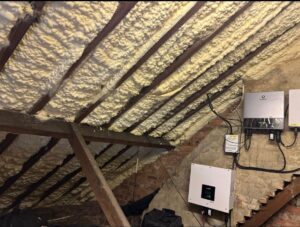
Spray foam insulation is applied directly to the underside of roof tiles or between rafters. Once sprayed, it expands rapidly and hardens into an insulating layer designed to improve energy efficiency and reduce heat loss.
There are two main forms of spray foam insulation used in UK properties.
Open cell foam is softer and more breathable. It allows a degree of moisture movement and is generally lighter in structure. Although some lenders view it more favourably than closed cell alternatives, it can still create issues during surveys and valuations.
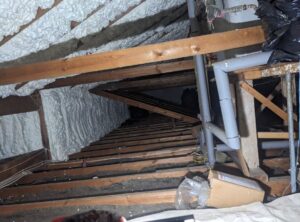
Closed cell foam is denser, harder, and far less breathable. While it offers strong insulation properties, it is also the type most commonly associated with mortgage concerns. Because it forms a rigid bond with roof timbers and tiles, surveyors often struggle to inspect the condition of the roof beneath it.
In many cases, this inability to inspect hidden roof structures is precisely why lenders become hesitant.
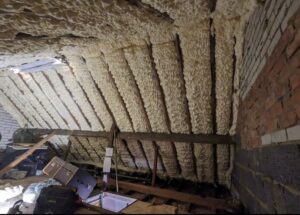
The growing issue surrounding spray foam insulation is not necessarily the insulation itself. The real concern lies in what may be hidden beneath it.
When spray foam is applied directly to roof felt and timber, it can restrict airflow and trap moisture. Over time, this may contribute to condensation, timber decay, or hidden structural deterioration. Because surveyors cannot always see what is happening underneath the foam, many mortgage lenders consider the risk too high.
As a result, homeowners are increasingly facing situations where:
This has led to a significant rise in demand for professional spray foam removal services across England.
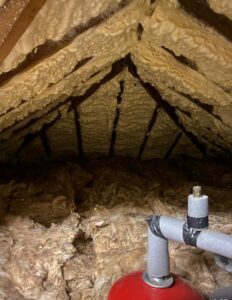
Spray foam removal involves the physical extraction of the insulation from the loft or roof structure. The objective is to restore visibility and access to the roof timbers, tiles, and felt beneath the foam.
Professional removal specialists use a combination of tools, techniques, and careful extraction methods to remove the foam while minimising damage to the roof structure.
In most cases, the process includes:
For homeowners dealing with mortgage problems, full removal is often the most straightforward solution. Many lenders and surveyors prefer complete removal because it allows the roof structure to be properly inspected again.
Spray foam re claim is a more nuanced process. Rather than completely stripping the foam away, re claim focuses on managing or partially removing problematic sections while preserving areas that may still be functioning safely.
In some situations, only specific sections of spray foam are causing concern. A professional assessment may determine that targeted removal, ventilation improvements, or corrective work can address the issue without requiring full extraction.
Re claim solutions can include:
The purpose of re claim is not simply to avoid removal costs. Instead, it aims to determine whether a less invasive solution can still satisfy structural concerns or survey requirements.
However, it is important to understand that re claim is not suitable in every case. Some lenders will still insist upon complete removal before approving a mortgage.
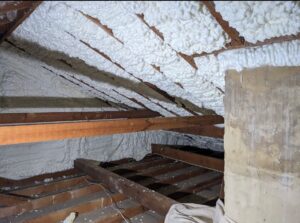
The distinction ultimately comes down to extent and purpose.
Spray foam removal seeks to eliminate the insulation entirely so that the roof can be fully inspected and restored to a more conventional condition.
Spray foam re claim seeks to manage the existing installation through corrective action, selective removal, or remediation work.
Removal is generally more comprehensive, while re claim is often more situational.
A homeowner facing an urgent mortgage rejection may require complete removal to satisfy lender requirements. Another property owner with minor survey concerns may benefit from a more tailored re claim approach.
Every property is different, which is why professional assessment is essential.
There are several situations where complete removal is usually considered the safest and most practical route.
If a lender has specifically requested removal, partial measures are unlikely to resolve the issue. Full extraction often becomes necessary to proceed with the mortgage.
If moisture, condensation, timber decay, or poor ventilation are discovered beneath the foam, removal allows the roof structure to be properly repaired.
Because closed cell foam bonds tightly to roof materials, it is often viewed as the higher risk option. Many surveyors recommend removal as a precaution.
Removing problematic insulation before listing a property can help avoid delays later in the conveyancing process.
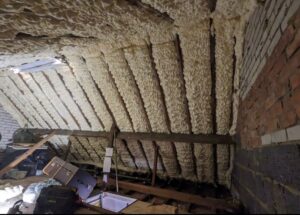
There are also cases where a more measured solution may be suitable.
If the spray foam is not causing visible damage and only limited inspection access is required, selective remediation may resolve the issue.
Some open cell products are viewed more favourably because they allow greater breathability. In certain circumstances, professional reports and corrective work may be sufficient.
Where the primary concern is poor airflow rather than structural damage, improving loft ventilation may reduce risk significantly.
While safety and lender requirements should always come first, re claim solutions can sometimes reduce disruption and expense where full removal is unnecessary.
One of the most common questions homeowners ask is how much spray foam insulation removal will cost.
There is no universal figure because pricing depends on several factors, including:
Closed cell foam generally takes longer to remove due to its density and adhesion. Older installations can also present additional challenges.
A professional survey is usually the best way to obtain an accurate quotation.
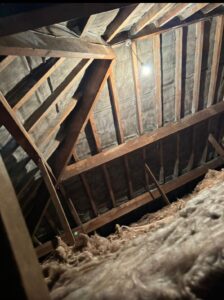
Professional removal specialists aim to minimise disruption wherever possible. However, the reality is that some roof coverings or felt materials may already be compromised beneath the insulation.
This is another reason why experienced assessment matters. A careful removal process allows hidden problems to be identified before they worsen further.
Attempting DIY spray foam removal is strongly discouraged. Improper removal techniques can damage rafters, disturb roofing materials, and create safety risks within the loft space.
Spray foam issues are rarely identical from one property to another. Some lofts remain structurally sound, while others conceal years of trapped moisture and deterioration.
An experienced inspection helps determine:
At Foam Away, the focus is always on giving homeowners clear, honest guidance rather than unnecessary alarm.
As awareness around spray foam insulation grows, so too does the importance of using qualified specialists. Mortgage lenders, surveyors, and buyers increasingly expect professional documentation and evidence that work has been carried out correctly.
Homeowners across Dorset, Hampshire, Sussex, Birmingham, Coventry, and the wider Midlands are now seeking trusted experts who understand both the technical and property market implications of spray foam insulation.
The issue is no longer simply about insulation. It is about mortgageability, structural confidence, and protecting long term property value.
Yes. Some lenders may refuse mortgages on properties containing spray foam insulation, particularly closed cell foam, because of concerns surrounding hidden roof damage and limited inspection access.
Not necessarily. However, poorly installed spray foam or trapped moisture beneath the insulation can contribute to roof problems over time.
Spray foam re claim refers to corrective or partial remediation work designed to address specific concerns without always requiring complete removal.
No. Policies vary between lenders. Some may request specialist reports, while others insist upon full removal before lending.
Closed cell spray foam is generally considered more problematic because it is denser, less breathable, and more difficult to inspect beneath.
Yes, although spray foam may complicate the process if surveyors or mortgage lenders raise concerns during conveyancing.
Spray foam removal and spray foam re claim are not the same thing, and understanding the distinction is essential for homeowners navigating mortgage concerns or property surveys.
In some cases, targeted corrective work may provide an appropriate solution. In others, full removal is the clearest path forward. The right approach depends entirely on the property, the type of insulation installed, and the concerns identified during inspection.
What matters most is obtaining professional guidance from specialists who understand both the technical and financial implications involved.
For homeowners across the South Coast and the Midlands, Foam Away provides honest assessments, expert advice, and professional solutions tailored to each property. Whether you are facing a remortgage issue, preparing to sell your home, or simply seeking reassurance about your loft insulation, speaking with an experienced specialist can provide much needed clarity.
If you are facing concerns surrounding spray foam insulation, obtaining professional advice early can make all the difference. Whether you have been flagged during a mortgage survey, are preparing to sell your property, or simply want reassurance about the condition of your roof space, Foam Away is here to help.
With extensive experience supporting homeowners across the South Coast and the Midlands, Foam Away provides honest assessments, expert guidance, and tailored solutions for both spray foam removal and spray foam re claim. Every property is different, which is why the team takes the time to fully inspect each installation before recommending the most appropriate course of action.
From Bournemouth and Southampton to Birmingham, Leicester, and beyond, homeowners trust Foam Away for professional service, clear communication, and a straightforward approach to resolving spray foam concerns.
To arrange a survey, discuss your options, or speak with a member of the team, get in touch with Foam Away today and take the first step towards restoring confidence in your property.
Trusted & verified on