Spray foam insulation was once marketed as a revolutionary solution for improving energy efficiency within British homes. Promoted through government backed schemes and aggressive sales campaigns, it appeared to offer homeowners an easy route towards reduced heating costs and improved thermal performance.
However, the reality has become considerably more complicated.
Across England, increasing numbers of homeowners are now discovering that spray foam insulation can create serious problems when attempting to sell or remortgage their property. Surveyors are flagging concerns, mortgage lenders are becoming cautious, and many property owners are facing substantial removal costs simply to restore confidence in their homes.
For some, what began as an energy saving improvement has become a financial burden capable of delaying sales, reducing property values, and concealing damage within roof structures.
At Foam Away, we regularly assist homeowners who are confronting the consequences of problematic spray foam installations. Through our specialist Spray Foam Reclaim service, we help restore roof spaces, improve mortgageability, and provide practical solutions for properties affected by spray foam insulation issues.
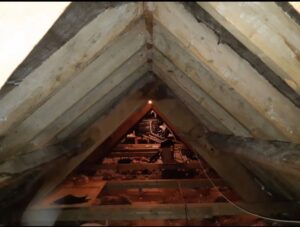
Spray foam insulation is a chemical product applied directly onto roof tiles, rafters, loft spaces, and cavity areas in order to create a thermal barrier. Once applied, the foam rapidly expands and hardens, forming an insulating layer intended to reduce heat loss.
There are two primary types of spray foam insulation used within UK homes.
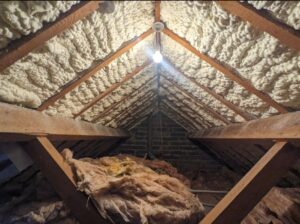
Open cell spray foam is softer and lighter in texture. It allows a degree of air movement and is generally considered less rigid than its counterpart. Whilst some installers claim this makes it more breathable, it can still create significant complications when applied incorrectly.
Closed cell spray foam is far denser and more rigid. It forms a hard surface that bonds tightly to roof timbers and tiles. Although it offers stronger insulation properties, it is also associated with greater structural concerns because it can trap moisture and restrict proper roof ventilation.
Mortgage lenders and surveyors often view closed cell foam with heightened concern due to the difficulty involved in inspecting roof structures hidden beneath the material.
The controversy surrounding spray foam insulation has intensified in recent years as mortgage providers and surveyors have become increasingly cautious.
Lenders such as Halifax, Santander, Barclays, Nationwide, and HSBC have all been linked to stricter scrutiny involving properties containing spray foam insulation. Whilst policies vary, many surveyors now identify spray foam as a potential risk factor during valuations.
This caution largely stems from several recurring concerns.
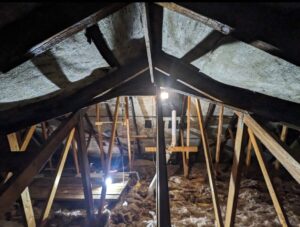
Spray foam can adhere directly to timber rafters and roof structures, making inspections extremely difficult. Over time, trapped moisture may contribute to timber decay, mould growth, or rot that remains concealed beneath the foam.
Surveyors are unable to fully assess the condition of hidden structures without removal, which naturally increases lender hesitation.
Traditional roof spaces rely upon airflow to regulate moisture levels. Spray foam insulation can obstruct ventilation pathways, allowing condensation to accumulate unnoticed over prolonged periods.
This may gradually compromise the integrity of roof timbers and create conditions favourable to damp related deterioration.
Many homeowners only discover the implications of spray foam insulation when they attempt to sell their property.
Potential buyers may struggle to obtain mortgage approval, resulting in delayed transactions or collapsed sales altogether. In some cases, homeowners are required to remove the foam before lenders will proceed.
Removing spray foam insulation is neither simple nor inexpensive. Specialist removal techniques are often necessary to avoid damaging roof structures beneath the foam.
Costs vary significantly depending upon property size, foam type, accessibility, and installation quality. However, many homeowners face substantial unexpected expenses in order to restore lender confidence.
Whilst energy efficiency remains important, homeowners must also understand the broader implications associated with spray foam insulation.
Properties containing spray foam insulation may be viewed as higher risk by surveyors and lenders alike. This perception can negatively affect market value and buyer interest.
Even where no visible damage exists, uncertainty surrounding concealed roof conditions can discourage potential purchasers.
Mortgage refusals involving spray foam insulation have become increasingly common throughout England.
Surveyors acting on behalf of lenders may recommend further inspections or outright rejection until the foam has been professionally removed. For homeowners attempting to move quickly, this can create enormous frustration and financial pressure.
When ventilation becomes restricted, condensation may accumulate within roof spaces over many years. Unfortunately, because spray foam conceals underlying materials, moisture problems may remain undetected until considerable deterioration has occurred.
In severe cases, roof timbers affected by trapped moisture may weaken over time. Repairing compromised structures can become extremely costly, particularly where extensive timber replacement is required.
Routine roof repairs also become more difficult once spray foam has been installed. Roofers may struggle to identify leaks or inspect damage hidden beneath hardened foam layers.
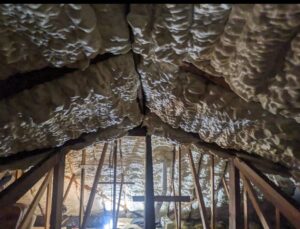
Many homeowners remain unaware that their spray foam installation may already be causing concern.
Common warning signs include:
If any of these issues arise, seeking professional advice promptly is strongly advisable.
Unfortunately, the answer can be yes.
Whilst not every installation results in damage, poorly installed or incorrectly specified spray foam can create long term structural concerns. Closed cell foam is particularly problematic because it bonds aggressively to roof materials and restricts natural movement and ventilation.
Over time, moisture trapped against timber surfaces may accelerate decay. Roof repairs also become more invasive because foam often requires removal before proper inspection can occur.
This is precisely why many surveyors now approach spray foam insulation with caution.
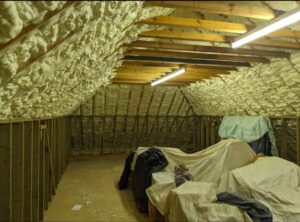
The cost of removing spray foam depends upon several important factors.
These include:
Whilst smaller removals may cost several thousand pounds, larger or heavily affected properties may require more substantial investment.
However, many homeowners find that removal becomes essential in order to proceed with property sales or mortgage approvals.
At Foam Away, we provide professional assessments designed to help homeowners understand the safest and most practical route forward.
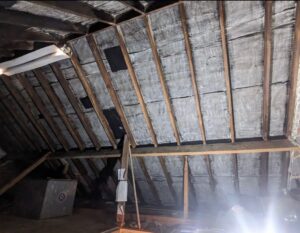
Foam Away’s Spray Foam Reclaim service is designed to help homeowners restore confidence in their properties through professional assessment and removal solutions.
Our service focuses upon:
We understand the stress many homeowners experience after discovering spray foam related issues. Our aim is to provide practical guidance, transparent solutions, and professional workmanship throughout every stage of the process.
Foam Away supports homeowners throughout England who are facing concerns involving spray foam insulation.
Whether you are attempting to sell your home, secure a mortgage, or simply gain peace of mind regarding your roof structure, our experienced team can assist with tailored advice and specialist removal solutions.
We recognise that many homeowners feel overwhelmed after receiving negative survey reports or lender warnings. Through our independent expertise and Spray Foam Reclaim service, we help clients move forward with clarity and confidence.
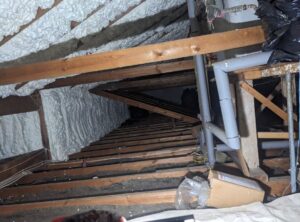
Many lenders are concerned because spray foam can conceal roof defects, restrict ventilation, and make structural inspections difficult.
Spray foam itself is not always inherently dangerous, but poor installation and long term moisture retention can contribute to serious property issues.
Yes. Some buyers and lenders view spray foam as a potential risk, which may affect marketability and valuations.
Open cell foam is generally considered less rigid and more breathable, although both types may still create concerns if installed incorrectly.
Yes. Specialist services such as Foam Away’s Spray Foam Reclaim service can professionally remove problematic installations.
Signs may include mortgage delays, damp smells, mould growth, surveyor warnings, or visible timber deterioration.
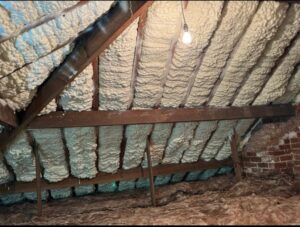
Spray foam insulation was once widely promoted as an innovative energy saving solution. Yet for many homeowners across England, the long term consequences have proven deeply concerning.
Mortgage complications, hidden roof damage, reduced property values, and costly removals are becoming increasingly common realities associated with poorly installed spray foam insulation.
If you have concerns regarding spray foam within your property, seeking professional guidance early can help prevent greater financial and structural difficulties in the future.
Foam Away provides trusted independent expertise alongside specialist Spray Foam Reclaim solutions designed to help homeowners restore confidence in their homes.
Whether you require a professional assessment, removal advice, or support during a property sale, our experienced team is here to help.
Trusted & verified on